
3 Real Questions That Reveal Whether Your Content Is Truly Original
“Can this really work for me?”
You open a blank page to write a post, an email, or a lesson for your own audience. Somewhere behind the cursor is a quiet doubt that whatever you make will not hold up next to everyone else saying the same thing. Often that is because an AI tool is doing half the sentences for them.
Here is the honest answer. What makes your original content worth reading was never about whether you used AI to help write it. It is about what only you put into it. A reader who finds your work can usually tell, within a paragraph, whether there is a real person behind it. Someone who has walked the ground being described, not just read about it.
That matters more now than it did two years ago, because AI can produce a competent article on almost anything in under a minute. Competent is no longer enough.
What AI Cannot Fake
AI can copy a tone. It can copy a structure. It can even copy the rhythm of a confident sentence.
What it cannot do is sit across from one specific customer and hear what they are struggling with. It cannot notice the small detail that only shows up after you have talked to the same kind of person a hundred times.
I spent 38 years in practice listening to patients before I ever wrote a sentence online. The lesson carried straight over. Understand your customer, find out what they want, figure out where they are stuck, and get to the unsticking of them. No tool does that work for you.
What makes your original content worth reading was never about whether you used AI to help write it. It is about what only you put into it.
The newest tool rarely changes this. In my own experience, the newest thing is usually a spin on an old thing, dressed up to look more complicated than it is. There are no shortcuts, no just-add-water version of understanding a real person.
Three Honest Questions Before You Publish
I use three plain questions before anything goes out under my name, and they take about two minutes.
Could this specific detail have only come from me? If you swapped out the example and nobody would notice, it was probably never yours to begin with.
Did this come from an actual conversation, or a guess about what someone might want? A guess reads like a guess, even when it is dressed in confident language.
Would I be comfortable with someone in my own audience reading this ten years from now? That question has quietly killed more weak paragraphs for me than any editor ever has.
Run your next piece through those three questions before you hit publish. You will feel the difference almost immediately.
Why Direct Interaction Still Wins
It is difficult to find out what a customer wants without talking to them. Most marketers skip this step and guess instead, then wonder why the guess did not land.
Don’t make your idea their idea. Ask them plainly. What’s Going On? is a question I still ask my own customers, and it has never once failed to turn up something useful.
I have written more about turning real conversations into real content in other articles I have shared recently, and the pattern keeps repeating. The businesses that last are rarely the ones chasing the newest trick. They are the ones still listening.
Let the Tools Handle the Repetition, Not the Listening
I use eShowcase to handle the repetitive side of my own business, from storing customer details to sending out emails and texts automatically. It has become something close to eShowcase, my man Friday.
That frees up the hours that matter most. The hours where I am talking to one real person, finding out where they are stuck, and writing something that could only have come from that conversation.
AI and automation are not the enemy of original content. Treating them as a replacement for the listening is.
Where This Leaves Your Next Piece of Content
You do not need to throw out every tool you use. You need one habit: before anything goes out, ask whether a stranger reading it would feel like they met a real person, or like they read a well-arranged summary of one.
If the honest answer is the second one, that is not failure. It is information. I haven’t learned to do this yet is a far more useful sentence than I can’t do this, and it applies here as much as anywhere else.
Noodle on your last three posts with those three questions in mind. You will probably already know which ones pass.
Writing content that only you could have written is one piece of building something that lasts. Turning that into an actual publishing business, with a plan for growth sitting behind it, is a bigger piece, and it is not one most people figure out alone.
If you are at the point where you want the fuller picture of building a real information publishing business around your own voice, rather than piecing it together post by post, Six Figures A Year In Information Publishing walks through that in a way I have found worth pointing people toward.
I’m not here to tell you that you need it. I’m just letting you know it exists, for whoever is ready to go a little further.
Your next post does not need to be perfect. It just needs to be unmistakably yours.
All the best,
Jon
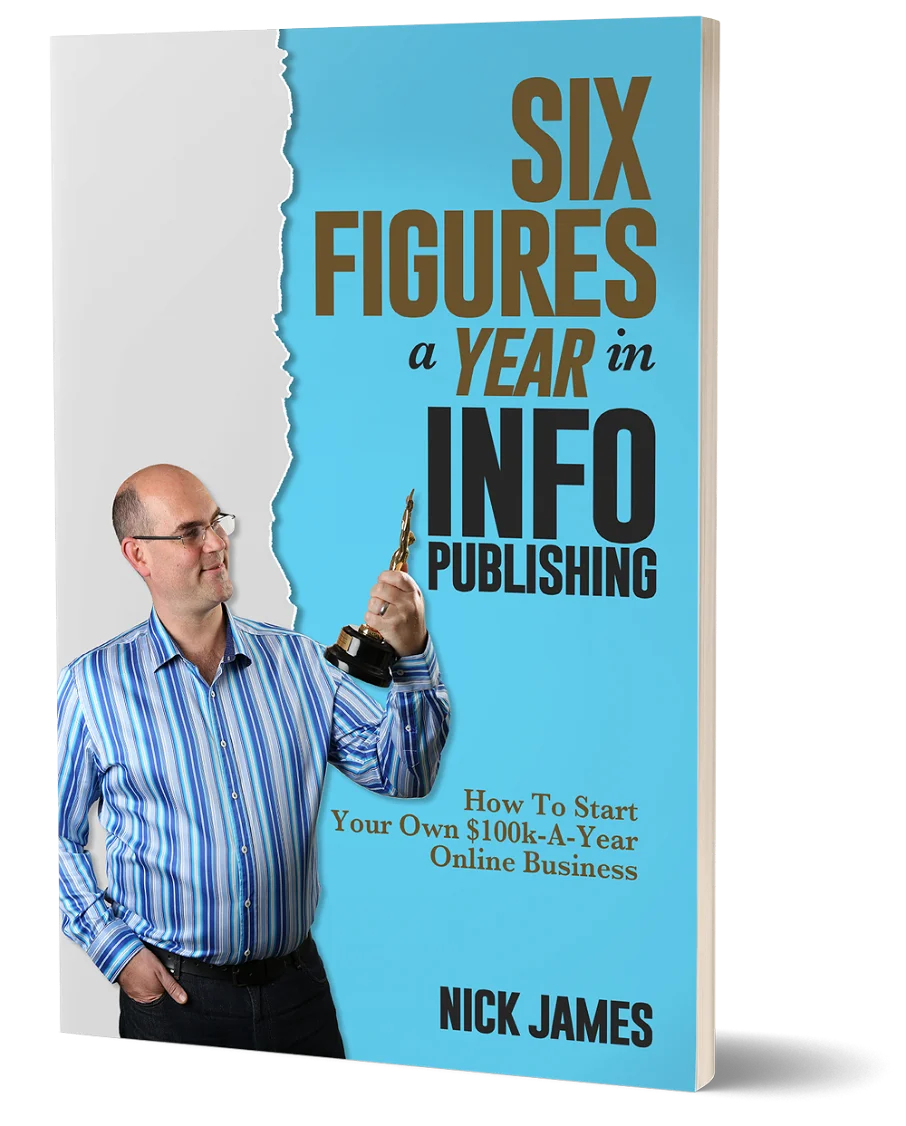
Author offers a FREE copy of this book to his next door neighbor... to prove he's not a drug dealer!
Now claim your FREE COPY.
and follow the step-by-step instructions for making the kind of money (and living the kind of lifestyle) that'll get your neighbors curtains twitching with curiosity!
Enter your details below to discover how to claim your FREE COPY of 'Six Figures A Year In Info Publishing' ...
Privacy Policy : We value your privacy. You can unsubscribe from receiving future emails with 1 click at any time.