

The Surprising Reason Asking One Easy Question Earns Replies
I have been reading through the comments on other people’s posts lately. These are the kind where someone asks their audience to weigh in at the end of an article or a video. Most of those comment sections sit empty. A few get two or three low effort replies. And every so often, one post gets forty genuine responses from people who clearly wanted to answer.
What separates the forty from the two is almost never the size of the audience. It is the question itself, and whether it was built to be answered or just tacked on at the end.
If you are trying to build an online income and move past trading hours for a paycheck, pay attention here. It matters more than it sounds like it should. People will tell you exactly what they want, where they are stuck, and what they would pay for. All you have to do is ask them in the right way. Most of us never ask at all. We just hope they volunteer it, and then wonder why the comment section stays quiet. Better questions change that, and they cost nothing to try.
Most Questions Ask For Work, Not An Answer
“What do you think? Comment below!” is not really a question. It is a request for your reader to do something extra, with no clear reward for doing it.
Compare that to something like: “What’s the best fifty dollars you’ve ever spent on your business?” Nobody has to think hard to answer that. They just remember, and type.
Easy to answer beats important to answer, almost every time. People will happily tell you about a small win or a strong opinion. Fewer people will sit down and compose an essay about their long term strategy, even if you asked nicely. A reader scrolling past your post on their phone is not going to stop and write you a paragraph. They will stop for a question they can answer in one line.
Think about the last three questions you asked your audience. Were they questions with an obvious one-line answer, or did they ask someone to stop and work out a position? The gap between those two is the gap between forty replies and two.
“What’s Going On?” Still Works Better Than Guessing
I keep coming back to a phrase I use with people building something new: What’s Going On? Not “what do you think of my idea,” but a genuine question about where they really stand right now.
Decades of listening to patients taught me something I did not expect to carry into an online business. You cannot help someone get unstuck until you know exactly where they are stuck, in their own words, not yours. Don’t make your idea be their idea. Ask them directly, and let them tell you.
That is the whole trick behind a good question. It is not clever. It is specific enough that the other person can answer it without effort, and personal enough that they want to. Ask better questions and the answers start doing the work your guesswork never could.
Why Chasing The Next Platform Can Cost You What You Already Have
I worked with one customer who was building an email list with recurring content, and doing fine. Then he saw a promotion for starting a YouTube channel. He dropped what was working to chase it. He had not seen any real payoff from the list yet, and he lost the small but engaged audience he had built. This is one customer’s experience as I saw it, not proof of a wider pattern.
Easy to answer beats important to answer, almost every time.
He was not short on attention when he quit. He was short on patience with the slow, quiet work of building a real relationship with the people he already had. A new platform always feels like the answer. Usually it is just a different distraction from the same unfinished job: talking to the people who are already listening.
If you want to see how this has played out in other updates I have shared recently, take a look. You will notice the same lesson keeps showing up in different clothes. The audience you already have is worth more attention than the one you do not have yet. Ask them something worth answering before you go looking for someone new to ask.
Three Kinds Of Questions Worth Asking
Here is where it gets practical. You do not need a survey tool or a focus group. You need better questions in the places you are already posting, emailing, or talking to people.
The opinion question works because people like sharing a view: “What’s the one piece of business advice you were given that turned out to be wrong?” Almost everyone has an answer ready before they finish reading the question. You might hear something about spending money on ads before understanding the offer itself. That one reply alone can become the seed of your next post.
The memory question works because it asks for a fact, not an argument: “What’s the first thing you ever sold online, and how much did it go for?” A memory is easier to hand over than an opinion, because nobody has to defend it. You might hear fifty dollars for a domain name, or five dollars for a one page template. Either answer tells you something about where that person started, and where they might be now.
The stuck point question is the one that matters most for your own planning: “What’s the one part of building this that still trips you up?” That answer tells you exactly what to build, teach, or recommend next. It is also the one question most people are too polite to ask, because it can feel like prying. Ask it anyway, and ask it plainly.
None of these asks anyone to compose an essay. All three ask better questions than “thoughts?” ever will, and all three hand you information you can really use.
Where This Starts Paying Off
I use eShowcase to keep my customer list and send emails and texts automatically. The replies people send back through it have taught me more about what they really want than any post I have ever written myself. eShowcase is not the point here. The habit of really listening to what comes back is.
Once you start asking questions like these, you stop guessing what your audience wants and start hearing it, plainly, in their own words. That is not a shortcut. It is the same unglamorous work that has built every business I have ever paid attention to, including my own.
Pick one place this week: an email, a post, a reply to a comment. Swap the generic “thoughts?” for one of the three kinds of questions above. Then read what comes back, really read it, not just skim for a number.
You Haven’t Learned To Ask Yet, That’s All
If your comment sections and replies have been quiet, that does not mean your audience has nothing to say. It usually means nobody asked them something worth answering.
You have not failed at this. You simply have not learned to ask yet, which is a very different thing. It is an easy one to fix, starting with your very next post.
All the best,
Jon
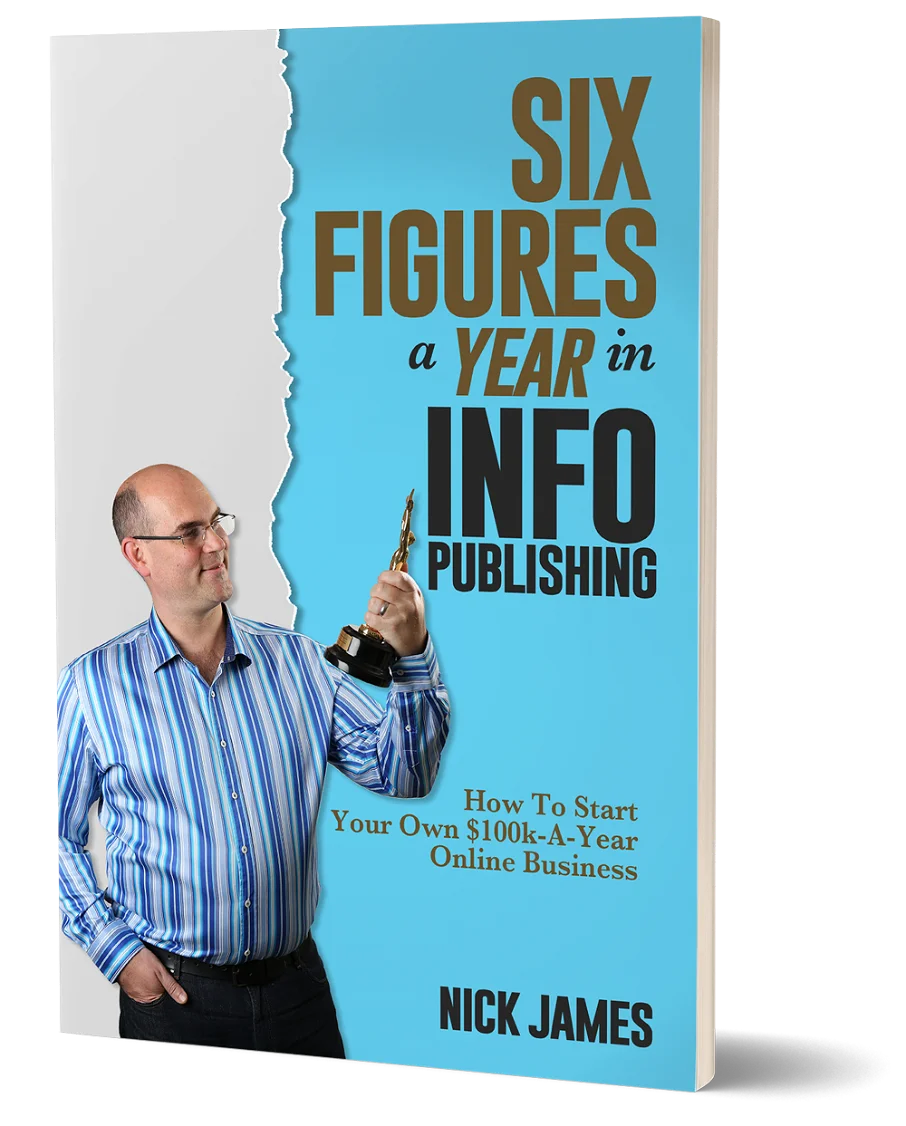
Author offers a FREE copy of this book to his next door neighbor... to prove he's not a drug dealer!
Now claim your FREE COPY.
and follow the step-by-step instructions for making the kind of money (and living the kind of lifestyle) that'll get your neighbors curtains twitching with curiosity!
Enter your details below to discover how to claim your FREE COPY of 'Six Figures A Year In Info Publishing' ...
Privacy Policy : We value your privacy. You can unsubscribe from receiving future emails with 1 click at any time.