

Your First Paying Customer: The Costly Planning Trap
Every month or so, somebody tells me they are getting close to their first paying customer. The website is nearly finished. The emails just need one more pass. The offer is almost ready to show anyone. “Just a little more,” they say, “and then I will know if this works.”
I hear a version of that sentence often enough that I have started to notice the pattern underneath it. The plan keeps growing. The customer never shows up. Months pass, and the idea is still waiting for its first paying customer.
If you have ever caught yourself polishing something nobody has seen yet, you know the feeling. Underneath the polishing sits the real question: Can this really work for me? That question only gets answered one way, and it is not by building more.
The Plan That Keeps Growing
I understand the instinct. If the website looks unfinished, who would trust it? If the offer is not completely worked out, why would anyone pay for it?
So the plan grows. One more page. One more lesson. One more feature nobody asked for yet. Each addition feels like progress, because something new got built.
But a plan does not pay you. A customer does.
And the longer the plan grows before a single person ever gets the chance to buy, the longer you are protecting yourself from the one answer that actually matters.
What A Paying Customer Actually Proves
A finished-looking website proves you can build a website. A well-written sequence of emails proves you can write emails. Neither one proves anyone wants what you are selling.
One person handing over real money proves something a hundred polished pages cannot. It proves the problem was real, the offer made sense, and the price was fair enough that a stranger chose to pay rather than keep their money.
I have written about this same pattern in other articles I have shared recently, and it keeps showing up in slightly different clothes. People trust the finished thing more than the tested thing, when it should be the other way around.
A small, slightly rough offer that one real person pays for tells you more than six months of careful planning ever will.
A business does not prove itself by looking finished. It proves itself the moment someone pays for it.
My First Sale Taught Me This
My own first sale in this business came from a man I will call Joel, not from a plan I had worked out in advance.
Joel was building something online and was stuck on the technical side of it, the part that felt like a foreign language to him. I offered to walk him through it, session by session, at $125 a session, with each one recorded so he could watch it again later.
There was nothing polished about that offer. I had no funnel of lessons waiting behind it, no finished course, no system. I had one person with one real problem, and a way to help him with it.
Much the same thing happens whenever anyone tests a small idea against a real stranger instead of against their own imagination. Watching Joel get it, really get it, taught me as much about explaining things simply as it earned me. I was being paid to learn to teach.
That is the part worth sitting with. The paid session did not just bring in $125. It told me, immediately, that the problem was real and that I could solve it. Everything I built afterward started from that one small proof, not from a plan drawn up before anyone had paid for anything.
Find One Person With A Real Problem
I believe direct interaction with a customer or a lead is one of the most underrated things in this business. It is easy to sit alone and guess what people want. It is much harder, and far more useful, to ask them.
Do not make your idea be their idea. Find out from them, “What’s Going On?”
Pick a small group of people you already understand, even a little. Pay attention to what they complain about, what they keep asking, what they are already paying someone else to deal with. That is where a real offer hides.
You do not need a hundred people to find your first paying customer. You need one person with a specific problem and the willingness to pay a fair amount to have it solved.
Ask For The Money, Not The Compliment
This is the part people quietly skip. They show the idea to friends, to family, to a supportive group online, and collect a stack of kind comments instead of a single payment.
Kind comments feel good. They also tell you almost nothing.
Ask for a small payment instead, even a modest one. Not because the money itself matters yet, but because a person who pays has made a different kind of decision than a person who simply agrees that your idea sounds nice.
If somebody hands over real money for a rough, honest, first version of what you are offering, you have learned something no amount of encouragement could have told you.
If nobody does, that is useful too. It usually means the problem was not painful enough, the offer was not clear enough, or you found the wrong person. None of those are failures. I have tried something like this before, and failed, more than once, before I understood what was actually missing.
Build The System After The Sale, Not Before
Once somebody has paid you once, you are no longer guessing. Now you can ask them what mattered most, what they wish you had included, and what they are still stuck on.
That conversation is worth more than another month spent refining something nobody has tested yet. Build the second version around what the first customer actually needed, not around what you assumed they would need before you ever spoke with them.
I have watched this play out more than once in my own business, including the parts that did not go the way I expected. A membership I once started building, with far too many pieces planned in advance, stalled before it was ever finished. I went back afterward and turned the individual pieces into smaller, standalone offers instead, which taught me the same lesson from the opposite direction. The sum of all those planned parts was never equal to one tested piece.
Start smaller than feels comfortable. Find the one person. Ask for the payment. Let what they tell you, and what they do, decide what gets built next.
Where This Leaves You
You do not need the finished version before you find your first paying customer. You need one honest offer, one real person, and the willingness to find out whether the answer to “can this really work for me” is yes.
Everything after that first sale gets easier to build, because you are no longer building for an imagined customer. You are building for a real one, with a real problem, who already said yes once.
Start there this week. One person. One small offer. One honest test.
All the best,
Jon
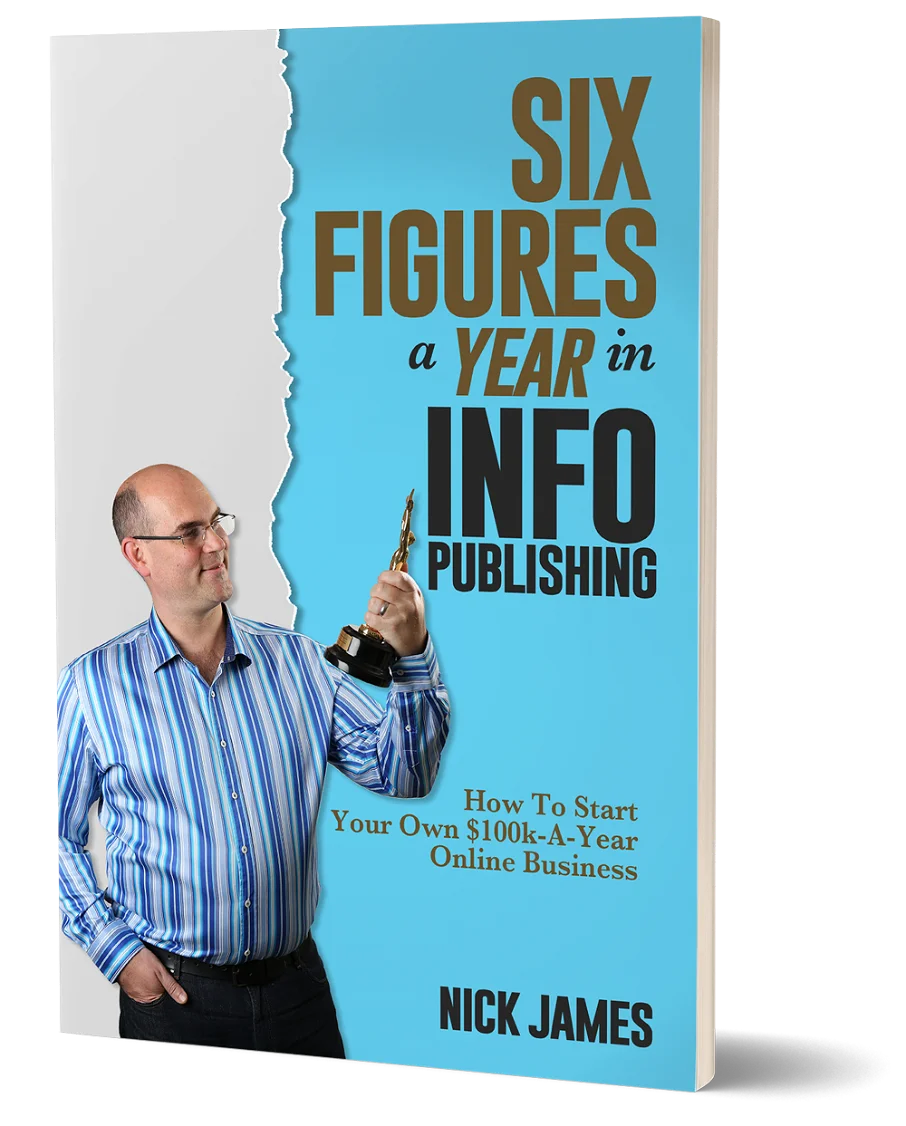
Author offers a FREE copy of this book to his next door neighbor... to prove he's not a drug dealer!
Now claim your FREE COPY.
and follow the step-by-step instructions for making the kind of money (and living the kind of lifestyle) that'll get your neighbors curtains twitching with curiosity!
Enter your details below to discover how to claim your FREE COPY of 'Six Figures A Year In Info Publishing' ...
Privacy Policy : We value your privacy. You can unsubscribe from receiving future emails with 1 click at any time.