

The Surprising Reason A Clear Invitation Gets Ignored
Somewhere along the way, a lot of us picked up the same unspoken rule: don’t make your ask too obvious. Soften it. Bury it a little, so you don’t look like you’re trying too hard. Tuck the real invitation near the bottom of the page, or better yet, leave it in a comment where only the curious will go looking for it.
It feels polite. It feels like good manners.
It is also the reason a clear invitation so often gets ignored, not because the reader said no, but because the reader never found it in the first place.
I have watched people build a truly useful page, write something worth reading, and still hear almost nothing back. The offer wasn’t wrong. The one thing they wanted a reader to do was the one thing they hid the hardest.
If you have ever sat there thinking, Can this really work for me? after sending something out into silence, the problem might not be your idea at all. It might be that the door you built was never where anyone could see it.
Why We Learn To Hide The Ask
Nobody teaches this rule on purpose. It builds up slowly, one awkward moment at a time.
Maybe you asked for something once and it felt forward. Maybe you watched someone else get called pushy for saying plainly what they wanted a reader to do. Either way, the lesson that sticks is the wrong one: the safest ask is the quiet one.
So the invitation gets softened. It moves to the end of a long page, after three sections nobody finishes. It gets wrapped in so much polite throat-clearing that a reader has to go looking for the actual point.
Picture two versions of the same email. In one, the link sits on its own line near the top: “Here’s where to start.” In the other, the same link is buried three paragraphs down, wrapped in a sentence that starts with “if you’re curious” and trails off in a comma. Both versions say the same thing. Only one of them gets clicked.
That isn’t modesty. It’s friction. And every bit of friction you add between someone being interested and someone taking action is a chance for them to simply move on with their day.
What A Clear Invitation Does
A clear invitation doesn’t ask for more than a soft one does. It just removes the guesswork.
Think about the difference between handing someone directions and handing them a map with no street names on it. Both are technically a map. Only one of them gets used.
Your reader is busy. They are not studying your page for clues about where you’d like them to go next. They are deciding, in a few seconds, whether this is worth their time at all. A clear invitation answers that question before they have to ask it.
This matters most for the people still deciding whether to trust you. Someone who has been burned before by a vendor who promised one thing and delivered another isn’t going to go hunting through your page for the real offer. They want to know, plainly, what happens if they say yes.
Think about what it costs to get this wrong. A reader who almost said yes, but couldn’t find the door in time, doesn’t come back later to look harder. They close the tab and the moment passes, usually for good.
I’ve shared a few other things along these lines in recent articles, and this idea keeps showing up in different forms: the thing standing between a reader and a result is rarely the offer itself. It’s whatever is making the next step harder to find than it needs to be.
The Real Fear Underneath It
Here’s what I think is going on when someone hides their invitation. It isn’t manners. It’s fear of being told no.
A quiet ask is easier to live with, because a quiet ask that gets ignored doesn’t feel like rejection. It just feels like nobody noticed.
A clear ask is harder, because now it’s obvious whether people wanted it or not.
The problem was never the idea. It was the door nobody could find.
But think about what that quiet approach is really costing you. It isn’t protecting you from a no. It’s trading a real answer for silence, and silence tells you nothing at all.
You can’t fix an offer you never got honest feedback on. You can only guess, tweak the wording again, and wonder why nothing moves. A clear invitation at least gives you something true to work with, even when the answer is no.
A Small Test For Your Next Email
Here’s a simple way to check your own work. Pull up the last email or page you sent out.
Find the exact spot where you want someone to act. Then ask yourself one question: could a reader skimming this in ten seconds find it without hunting?
If the answer is no, it isn’t that your reader didn’t want it. It’s that they never saw it clearly enough to decide.
Try moving it. Put it near the top, right after you’ve given the reader something useful. Say it in plain words instead of a soft hint. Let it stand on its own line instead of burying it in the middle of a paragraph.
I did this with an old email of mine once. The line I wanted someone to click was sitting in the middle of a paragraph, dressed up in a soft phrase like “if this sounds like something worth a look.” Once I pulled it out, put it on its own line, and said plainly what to do, the whole email read differently. It wasn’t louder. It was just visible.
You’ll likely feel exposed the first time you do this. That feeling is worth noticing, because it’s usually a sign you’re finally saying what you meant all along.
I’ll be honest about something else here, too. This isn’t about pressuring anyone into anything. It’s about respecting your reader enough to tell them plainly what you’re offering, and trusting them to make their own choice. That’s a very different thing than being pushy, even though the two get confused all the time.
Where This Leaves You
You don’t need a louder pitch. You need a clear one.
Say what you want your reader to do. Say it where they can see it. Then let them decide, instead of deciding for them by hiding the question in the first place.
That one change won’t fix everything. But it will finally tell you the truth about what you’re offering, instead of leaving you guessing in the quiet.
All the best,
Jon
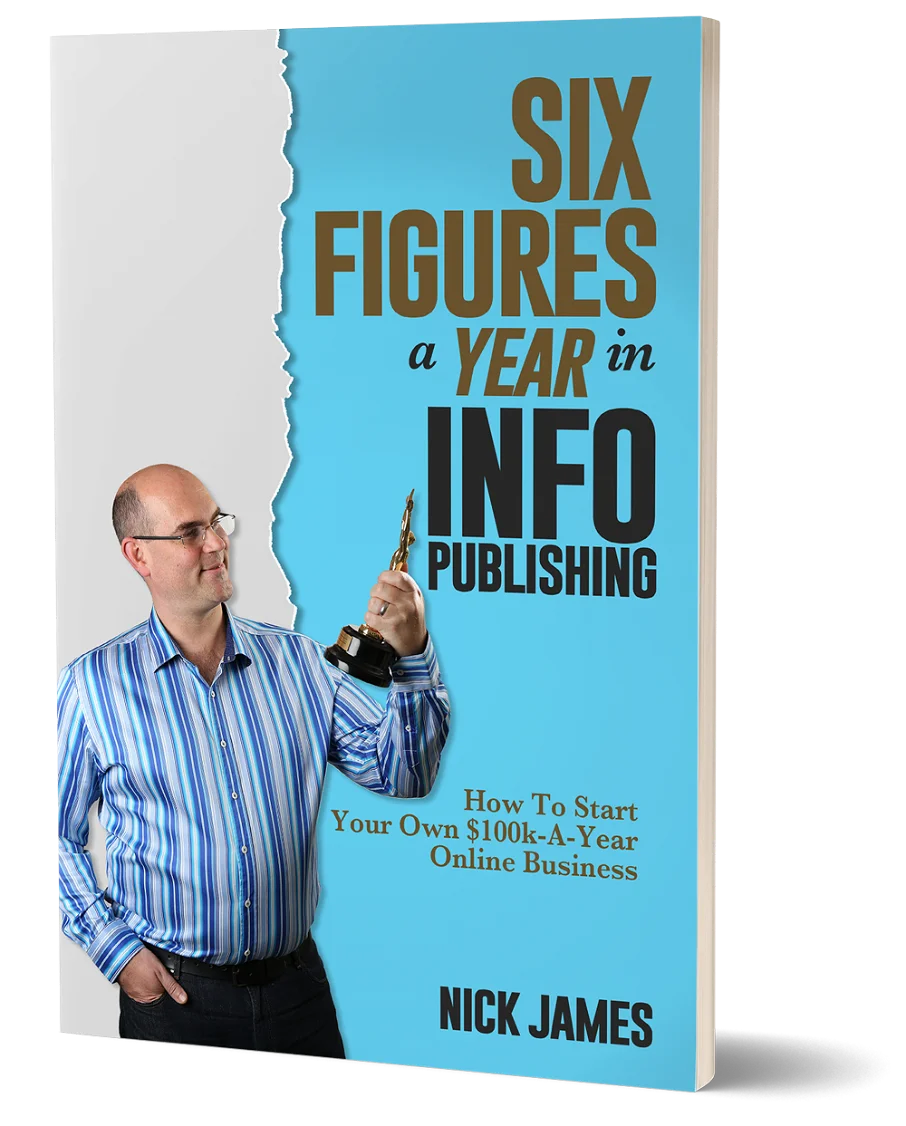
Author offers a FREE copy of this book to his next door neighbor... to prove he's not a drug dealer!
Now claim your FREE COPY.
and follow the step-by-step instructions for making the kind of money (and living the kind of lifestyle) that'll get your neighbors curtains twitching with curiosity!
Enter your details below to discover how to claim your FREE COPY of 'Six Figures A Year In Info Publishing' ...
Privacy Policy : We value your privacy. You can unsubscribe from receiving future emails with 1 click at any time.