

The Counterintuitive Reason Writing Fewer Emails Builds Real Income
Every week you sit down and write another email. Skip a week, and the sales slow down right alongside you. One of Jon’s readers put it to him plainly once: “I’m on a Disney ride I don’t like, and I can’t get off.” Most people building an online business think that ride is the job they already have. It isn’t. It’s the daily grind of having to write something new every time you want a sale, because nothing you wrote last month is still doing the work today.
Here is what an automated email sequence changes. Written once, in the right order, it keeps introducing you to new readers long after you’ve moved on to something else. You’re not chasing today’s sale. You’re building something that keeps making the case for you while you’re seeing patients, asleep, or simply living your day.
The Job That Never Stops When You Stop Writing
Most beginners picture an online business as an ongoing writing job. Draft an email, send it, do it again next week. That belief isn’t wrong exactly. It’s just backward.
The emails you send today don’t have to disappear the moment someone reads them. One email, written with care and placed in the right order, can go on introducing new subscribers to what you do for months after you’ve forgotten writing it.
That’s the difference between writing every day and writing once. It sounds small. It changes the whole shape of the business.
Write It Once, Then Hand It To Something Else
I use eShowcase to manage my own list, and it’s the closest thing I have to a man Friday. It sends the right message to the right person automatically, at the right point in their relationship with me, whether I’m at my desk or halfway through a clinic day.
That’s the real point of an automated email sequence. It isn’t about being clever. It’s about finishing something once, so it can carry weight for you every day after that.
Written once, in the right order, an email can keep making the case for you long after you’ve moved on to something else.
What I Learned From The Customer Who Chased YouTube
I worked with one guy who was building an email list with recurring content, and doing fine, until he saw a promotion for starting a YouTube channel. He dropped what was working to chase it, before he’d seen any real payoff on the email side, and lost the small but engaged list he’d built.
I only know this because he told me. It’s one story, not a pattern I’ve confirmed across every customer I’ve had. But it stuck with me, because it’s the same trap waiting for anyone building an automated email sequence.
You write five emails, then a new platform, a new tool, or a new tactic looks more exciting than finishing the other thirteen. The sequence sits half built, doing nothing, while you chase the next shiny thing.
The pull to abandon what’s working for what’s new is not a beginner problem. It’s a constant one. Finishing the thing you already started is usually worth more than starting the thing that looks newer.
The First Email Carries More Weight Than You Think
Nick James, who has been testing sequences like this in his own business since 2001, found that close to three in ten people who opened one of his emails went on to click something inside it, week after week, without him writing a new word once the sequence was live.
He also points to the first email in any sequence as the one that decides almost everything else. A new subscriber opens it while their interest is at its highest point. It shouldn’t just say thanks for joining. It should show, fast, that you understand the exact problem they came to you with.
I’ve found something similar true in a different kind of practice. Understand what the person in front of you actually wants, find where they’re stuck, and get to the unsticking of them. That’s not marketing advice. It’s what thirty-eight years of patient care taught me, and it applies just as well to the first email a stranger ever reads from you.
You Don’t Need A Big List To Start This
Here’s where most people stop before they begin. They assume a sequence like this only matters once they have thousands of names on a list.
It works the other way around. A finished sequence sells just as well for your fiftieth subscriber as it will for your five thousandth. Build it while your list is small, and every new subscriber from that point on meets the finished version, not one you’re still figuring out.
I’ve shared more of this kind of thinking in other articles I have shared recently, and the same idea keeps showing up. The newest tool probably isn’t the newest thing. It’s a spin on the old thing, dressed up to look more complicated than it is. There are no shortcuts. There is only finishing what you started.
What This Actually Frees You Up To Do
None of this is about working less for the sake of it. It’s about the income not depending entirely on whether you sat down and wrote something today.
An automated email sequence, finished once and left to run, is one of the few pieces of a business that keeps doing its job on the days you don’t show up for it. That’s the whole point of moving from trading hours for a paycheck to building something that keeps working after you’ve stepped away from the desk.
Where This Can Go Next
If building your first sequence still feels like the harder half of this, that’s the part a structured system tends to solve. Make Cash Like Clockwork is one option worth a look if you want a fuller framework for setting up recurring income that doesn’t depend on you writing something new each week.
I haven’t built my own business the exact way that course lays out, but the underlying idea, income that keeps arriving on a schedule you built once, is the same one behind everything above. If that’s the piece you’re missing, it’s worth going further with.
Start With Three Emails, Not Eighteen
You don’t need a finished eighteen-email sequence this week. You need three, written with care, that answer one question each: why you, why now, and what happens next.
Finish those three before you touch a fourth. A short sequence that’s actually done will always outwork a long one that’s still sitting half built in a folder somewhere.
All the best, Jon
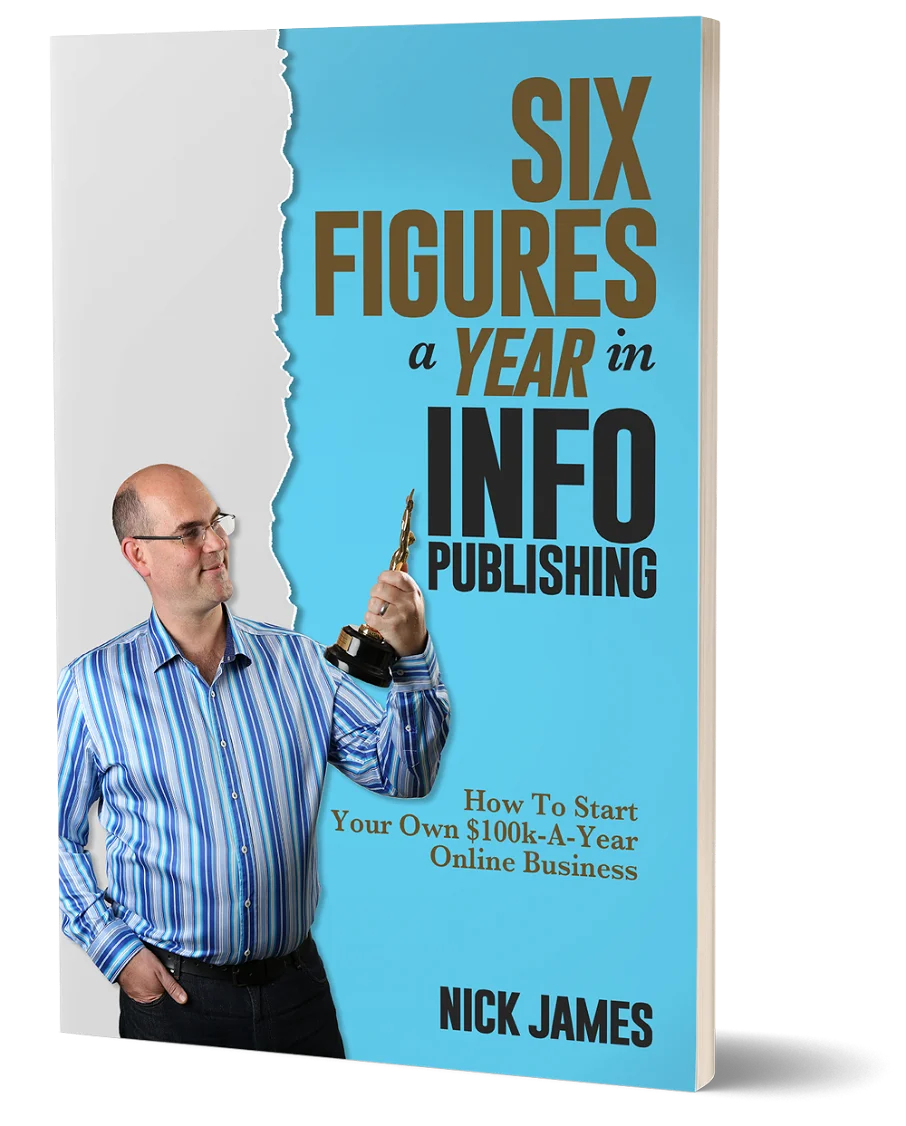
Author offers a FREE copy of this book to his next door neighbor... to prove he's not a drug dealer!
Now claim your FREE COPY.
and follow the step-by-step instructions for making the kind of money (and living the kind of lifestyle) that'll get your neighbors curtains twitching with curiosity!
Enter your details below to discover how to claim your FREE COPY of 'Six Figures A Year In Info Publishing' ...
Privacy Policy : We value your privacy. You can unsubscribe from receiving future emails with 1 click at any time.