

Discover the Clear Buyer’s Guide Your Readers and AI Trust
Can this really work for me? That is the question sitting quietly behind almost every search your readers type into Google, and now, more and more often, into AI.
They are not asking it out loud. They are asking which email tool is truly worth the money, which course is worth the price, which approach fits someone starting from nothing. And more of them than you might expect are no longer scrolling through ten blue links to find the answer. They are asking ChatGPT, or Gemini, or whatever sits built into their phone.
Here is the part worth sitting with. When AI goes looking for something to hand back to that person, it reaches for the same kind of page a careful human reader reaches for. That page is a truly useful buyer’s guide that lays the real options side by side.
That is good news for you, whether a reader finds you through a search engine, an AI answer, or a friend’s recommendation. The format that works for one works for both.
The Question Everyone Is Quietly Asking
Your readers are not short on information. They are short on someone willing to sort through it plainly.
Ask yourself what your own audience is weighing right now. Which email platform fits a one-person business. Which course on a subject truly delivers. Which approach to starting out is worth their limited time.
Those are buyer’s guide questions, even when nobody in your audience would use that phrase.
And whoever answers them clearly, without padding the answer toward whatever pays the best commission, becomes the person that reader keeps coming back to.
Think about how that plays out for something as ordinary as choosing a list-building tool. One option suits someone who already has a following and wants automation. Another suits someone starting from nothing who needs the cheapest possible monthly cost. A third suits someone who wants everything, website included, handled in one place. Naming those differences plainly, rather than steering every reader toward the same pick, is what makes a guide worth trusting twice.
Why a Plain List Still Beats a Polished Pitch
A sales pitch tells someone what to think. A good comparison lets them see it for themselves.
That difference matters more than it sounds like it should. A reader deciding between two approaches does not want to be convinced. They want to be shown.
Whoever answers a reader’s real question clearly, without steering it toward whatever pays best, becomes the person that reader keeps coming back to.
So instead of writing another article arguing that your way is the right way, try laying out the honest choices your reader is truly facing. Name the real options. Say plainly who each one suits and who it does not.
That single shift changes how a reader experiences the piece. They stop feeling sold to and start feeling helped. One of those builds trust. The other one spends it.
Think of two emails landing in the same inbox on the same morning. One insists this is the tool to use, full stop. The other says plainly who it fits and who should look elsewhere first. The second gets opened again next week. The first gets filed under things to skim past. That is the entire case for choosing comparison over conviction, and it costs nothing extra to write it that way.
Build the Guide Your Own Audience Is Already Searching For
Pick one question your audience keeps circling without quite asking out loud. Not a huge topic. One specific decision point.
Maybe it is which approach to building something online truly suits someone who still works a full-time job. Maybe it is which kind of first product fits someone with zero technical background.
Write it as a real comparison. Three or four honest options. What each one requires. What it costs in time, not only money. Who it is wrong for, said plainly, not buried.
Picture three readers facing the same decision. One has a few spare hours a week and no room for an expensive mistake. Another has more time than money and wants something slower but sturdier. A third wants the fastest route to something that already works. None of them are served by a single answer, and pretending otherwise is where most comparisons fail. Say plainly which reader each option suits, and which reader it does not, and most people recognise themselves in one of the three almost immediately.
That last part is the one people skip, and it is the one that earns the trust. Anyone can list reasons to choose something. Telling a reader when not to choose it is rarer, and readers notice the difference immediately.
I have covered a few smaller pieces of this kind of thinking in other articles I have shared recently. It keeps coming back to the same point: understand what the reader truly wants before you decide what to tell them.
What Makes a List Worth Citing, by a Person or a Machine
A thin list gets skimmed and forgotten. A strong one gets bookmarked, shared, and in AI’s case, pulled into an answer someone else never sees the source of.
Take two guides on the same topic. One says a certain email platform is the best option available. The other says it suits someone who wants simple automation and a low monthly cost, but names the platform it is not built for, and says so without flinching. A reader trusts the second one more, and so, it turns out, does the system summarising it for someone else. Specificity reads as evidence. A confident claim with nothing behind it reads as marketing, and both readers and machines have learned to discount it.
The difference is specificity. Real comparisons. Named drawbacks alongside the advantages. Current information rather than something copied from an older piece and never checked again.
It also means resisting the urge to slot your own recommendation into first place by default. Readers can sense that move from a distance, and so, increasingly, can the systems reading your page on their behalf.
Disclose anything you would earn from a recommendation. Say so clearly. A reader who sees honesty about that tends to trust the rest of the page more, not less.
Turn the Guide Into the Start of a Relationship
A good buyer’s guide does something a sales pitch never manages. It earns the right to a second conversation.
Someone who finds your honest comparison useful today is far more likely to open the next thing you send them. That is where a guide like this stops being a single piece of content. It starts being the opening move in an actual relationship with a reader.
Building and nurturing that relationship by email is its own skill, and one worth developing deliberately rather than leaving to chance. Lazy Way To Email Riches walks through exactly that. It covers everything from the first subscriber through to the follow-up messages that keep a reader paying attention long after the guide that brought them in. If building that kind of ongoing trust with your own list sounds like the next step for you, it is worth a proper look.
You do not need a large audience to start. You need one honest comparison, built around one real question your readers are already asking somebody, even if that somebody is a chatbot.
Start With One Guide
Pick the one decision your readers keep facing. Write down the real options. Say plainly who each one fits.
Leave out the padding. Leave in the drawbacks. That is the whole difference between a page that gets skimmed and one that gets trusted and remembered. It is quoted back to someone who never even visited it directly.
Start small. One guide, one question, answered as plainly as you know how. The rest tends to build from there.
All the best,
Jon
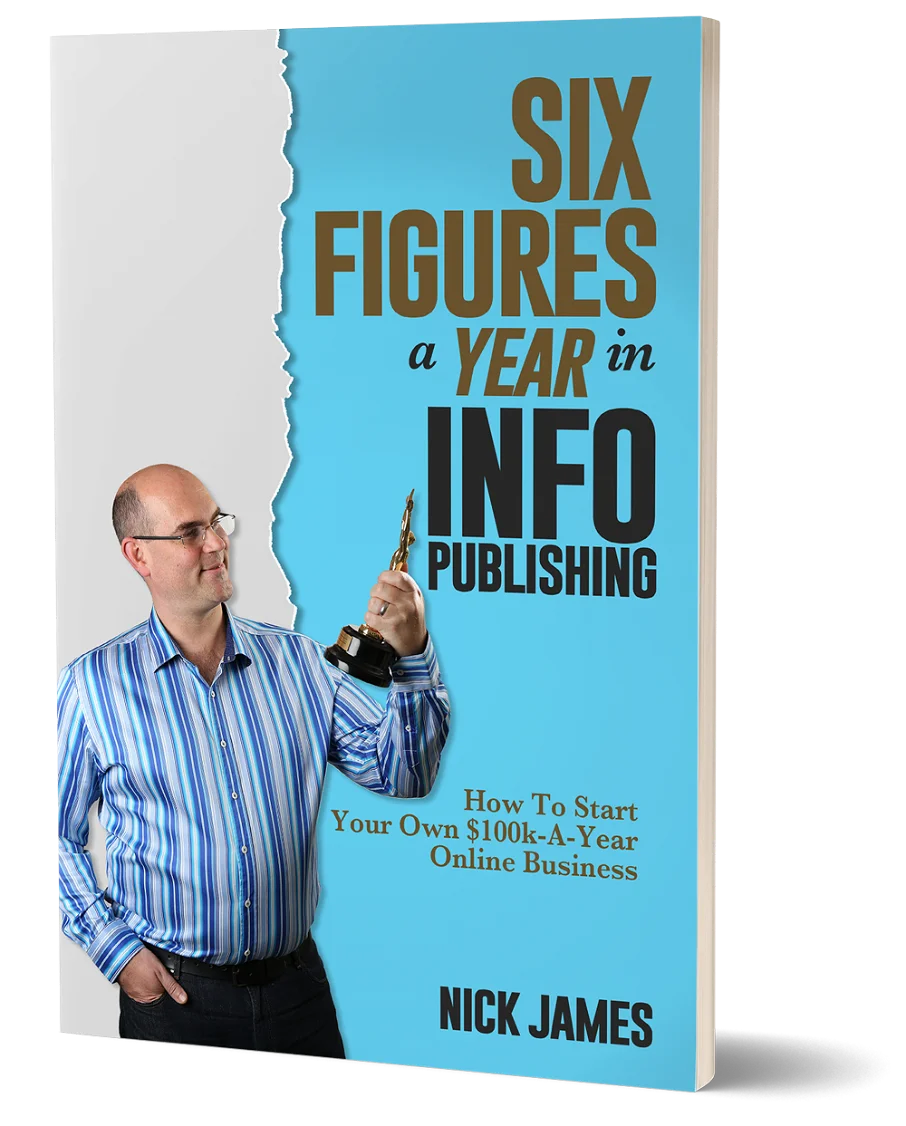
Author offers a FREE copy of this book to his next door neighbor... to prove he's not a drug dealer!
Now claim your FREE COPY.
and follow the step-by-step instructions for making the kind of money (and living the kind of lifestyle) that'll get your neighbors curtains twitching with curiosity!
Enter your details below to discover how to claim your FREE COPY of 'Six Figures A Year In Info Publishing' ...
Privacy Policy : We value your privacy. You can unsubscribe from receiving future emails with 1 click at any time.