



Most advice about getting more customers starts in the same place: find more strangers. Run more ads. Chase more clicks. Show up in front of people who have never heard of you.
That is the part nobody questions, and it is also where customer referrals get skipped entirely. The easiest new customers are not strangers at all. They are already sitting in a list you own, attached to people who have bought from you once and trusted you enough to do it.
I think about this every time a reader tells me, “I’m on a Disney ride I don’t like, and I can’t get off.” Growth always seems to require spending more, never less.
Customer referrals flip that around. They cost almost nothing, and the person they bring in already trusts you before they click a single link.
Most online businesses never ask for this kind of traffic. They wait for a happy customer to mention them, eventually, on their own. Eventually rarely arrives.
The List You Already Paid For
Every new customer costs you something. An ad. An hour spent writing. A slow climb toward being found, paid for in months instead of dollars.
Once someone buys from you, that cost is already paid. You earned their trust, one honest interaction at a time.
Here is the part most businesses never use. That trust does not stay locked inside one person. It travels the moment you give it somewhere to go.
A friend hears about you from someone they already believe. That introduction arrives warmer than any stranger who clicks a cold ad ever will. Customer referrals do not need convincing. They need an invitation.
Running the Referral Math
Picture a small business with four hundred people on its list. Ask every one of them, once, for a single referral. Even a modest response hands you dozens of new introductions.
Each of those new people already trusts whoever sent them. Some buy without ever seeing an ad.
Now compare that with paid traffic, where every one of those same visitors would have cost real money before a single sale happened. Some would have cost you money and bought nothing at all.
Customer referrals do not need convincing. They need an invitation.
None of this is complicated or new. It is simply the traffic you already own, counted properly for the first time. I have written about a few more small systems like this one in other articles I have shared recently. Each one costs nothing to set up.
A Reward Worth Saying Yes To
“Tell your friends about us” rarely works. It asks for effort and offers nothing back.
A specific reward works far better. Offer a small discount on a future purchase for every paying customer someone sends your way. Nothing dramatic, just enough that saying yes feels easy.
Picture a customer who sends you five people over a year. Each one buys. That one customer just became a quiet source of new business, and you never spent a cent finding them.
Keep the reward specific. “A reward for spreading the word” persuades nobody. “Fifteen percent off your next order for every friend who buys” persuades almost anyone.
Timing the Ask
Timing decides whether a referral request lands or gets ignored. The best moment is not six months later. It is right after a good experience, while the win is still fresh.
A short note after a purchase. A kind word once a question gets answered well. A quiet thank you the moment a result shows up.
Watch for the moment a customer says something kind, unprompted. That sentence is your open door. Walk through it with a specific ask, not a vague hint.
Make It Effortless to Share
A customer who wants to help you still needs the right words in front of them. Hand them one clear line to copy and send. Give them a link that leads somewhere specific, not just your homepage.
Most people will never sit down and compose their own message about you, however much they like what you sell. Write it for them, and far more of them will send it today instead of never.
The businesses that earn the most customer referrals rarely have the single best product in their market. They simply make referring effortless, while everyone else leaves it to chance.
Protect Your Own Margin
One honest question decides whether a referral reward strengthens your business or quietly drains it: what can you afford to give away on every sale it brings you?
Settle on that number before you announce anything. Start smaller than feels exciting. You can always raise a reward once you see how many people use it.
Raising a reward that started too small costs you nothing. Cutting one that started too generous costs you trust, and trust is exactly what this whole system runs on.
You do not need new software to get this started. You need somewhere to track who referred whom, and a simple way to reward them once a friend buys. I have been using eShowcase for years to keep my own customer list organized. It has quietly become my man Friday for exactly this kind of thing: who bought, who referred, and who is due a thank you.
You do not need a bigger ad budget to find your next customer. You need one honest reason for the customers you already have to introduce you to the next one.
Build the reward this week. Ask at the right moment. Then watch a source of customer referrals you already own start working quietly in the background, long after you set it up.
If this feels like something you have tried before and it did not stick, that is worth noticing rather than avoiding. I haven’t learned to do every part of this well either, not at first. The difference is usually one small fix, not a whole new plan.
All the best,
Jon

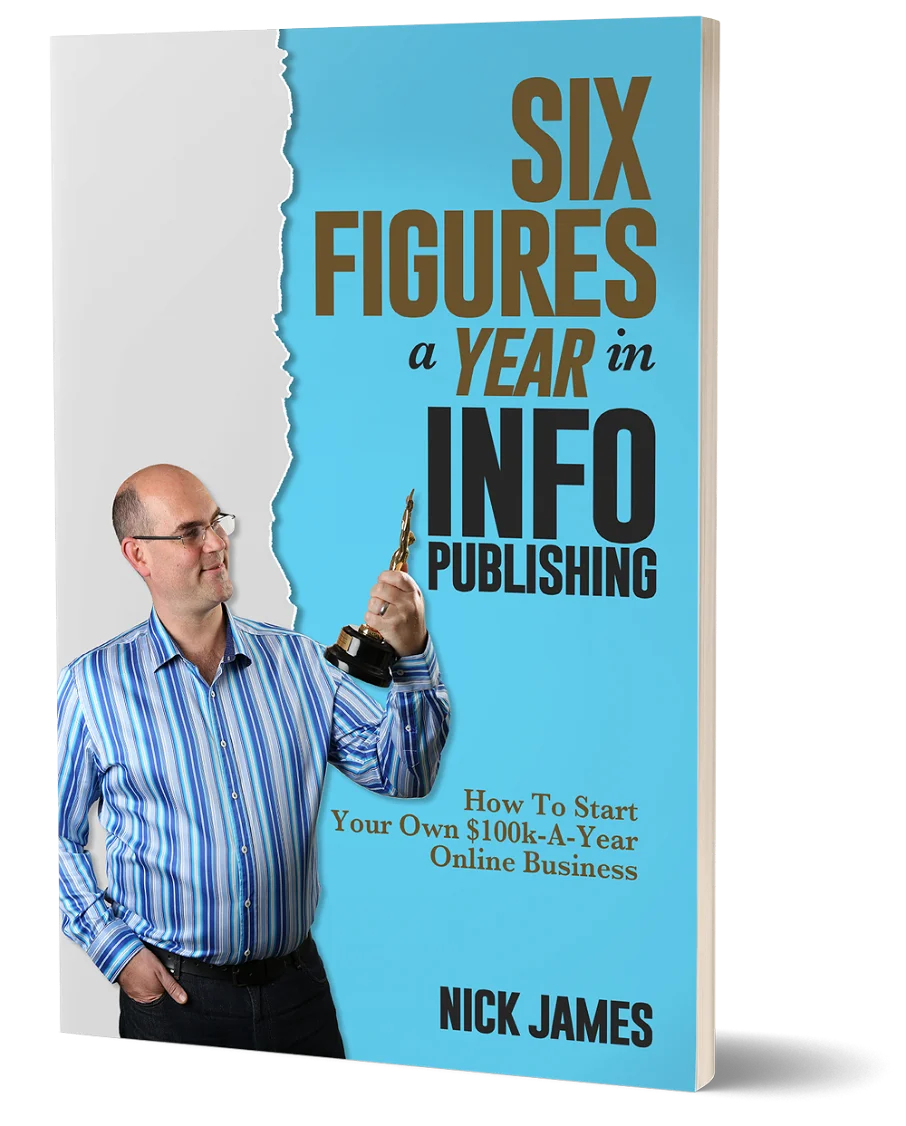
Author offers a FREE copy of this book to his next door neighbor... to prove he's not a drug dealer!
Now claim your FREE COPY.
and follow the step-by-step instructions for making the kind of money (and living the kind of lifestyle) that'll get your neighbors curtains twitching with curiosity!
Enter your details below to discover how to claim your FREE COPY of 'Six Figures A Year In Info Publishing' ...
Privacy Policy : We value your privacy. You can unsubscribe from receiving future emails with 1 click at any time.